AI verandert het werk van de compliance officer fundamenteel
De opkomst van AI‑tools zoals Microsoft Copilot biedt grote kansen voor organisaties, maar brengt tegelijkertijd nieuwe verplichtingen en risico’s met zich mee. Voor de compliance officer betekent dit een cruciale verschuiving. Waar compliance voorheen vooral draaide om gegevensbescherming, beleid en audits, vraagt AI om een bredere blik: hoe zorg je dat elke vorm van AI‑gebruik voldoet aan wet‑ en regelgeving zoals de AVG en BIO2, zonder innovatie te blokkeren?
Copilot werkt immers op basis van alle beschikbare data. Dat maakt het essentieel dat organisaties volledig begrijpen welke informatie door AI verwerkt kan worden en hoe dat zich verhoudt tot juridische en ethische kaders.
De grootste zorg: onbedoelde verwerking van gevoelige data
Een van de meest urgente risico’s is dat gevoelige of bijzondere persoonsgegevens via Copilot worden gebruikt zonder dat medewerkers dat doorhebben. Denk aan oude documenten met BSN‑nummers, persoonsgegevens in oude beleidsstukken of informatie die niet geclassificeerd is, maar wél in een omgeving staat waar Copilot toegang toe krijgt.
Voor compliance betekent dit dat traditionele beheersmaatregelen niet langer volstaan. AI maakt datalevering breder en sneller. Dat vraagt om nieuwe vormen van controle: beleid, classificatie en technische grenzen die voorkomen dat ongewenste gegevens überhaupt kunnen worden aangesproken door AI.
Wet‑ en regelgeving wordt strenger. En AI maakt toezicht complexer
De BIO2 en andere regelgeving stellen steeds hogere eisen aan organisaties. Denk aan:
- expliciete risicoafweging bij informatiedeling
- verplicht classificeren van alle gegevens
- aantoonbare maatregelen bij verwerking van persoonsgegevens
- transparantie over gebruikte systemen en datastromen
AI versnelt dataverwerking en vergroot de toegankelijkheid van informatie. Dat betekent dat compliance officers nog nauwkeuriger moeten vastleggen wat wel en niet is toegestaan. Het is niet genoeg om beleid te hebben; medewerkers moeten het begrijpen, toepassen en naleven.
Waarom goed AI‑beleid onmisbaar is voor compliance
Een van de grootste uitdagingen die wij in de praktijk zien, is het ontbreken van helder AI‑beleid. Zonder duidelijke spelregels ontstaat er onzekerheid. Medewerkers weten niet welke AI‑tools zijn toegestaan, wanneer data gebruikt mag worden of hoe incidenten moeten worden gemeld.
Een effectief AI‑beleid maakt onderscheid tussen:
- soorten data die AI wél mag gebruiken
- data die structureel moet worden uitgesloten
- rollen en verantwoordelijkheden binnen de organisatie
- processen rondom incidenten en toezicht
Dit beleid moet altijd aansluiten op bestaand databeleid en de taxonomie voor dataclassificatie.
AI‑compliance vraagt om een combinatie van techniek, beleid en menselijk gedrag
Compliance is nooit alleen technisch of alleen beleidsmatig. Bij AI is dat nog duidelijker. Om risico’s te beperken, moeten organisaties maatregelen combineren:
- Data Loss Prevention (DLP) om verwerking van gevoelige data te blokkeren
- SharePoint Advanced Management om risicosites uit te sluiten van AI‑indexering
- Monitoring via Defender for Cloud Apps om AI‑gebruik te volgen
- Training en bewustwording zodat medewerkers begrijpen waarom regels bestaan
Wanneer techniek, beleid en adoptie samenkomen, ontstaat een organisatie die AI innovatief én verantwoord gebruikt.
De compliance officer speelt een sleutelrol in veilige AI‑adoptie
Om AI verantwoord in te zetten, heeft een organisatie duidelijke kaders nodig. De compliance officer bepaalt deze kaders en zorgt dat processen en technologie in lijn blijven met de wet. Daarmee wordt de compliance officer een van de belangrijkste strategische schakels in de AI‑transitie.
Whitepaper
Wil je weten hoe je dit gestructureerd en praktisch aanpakt?
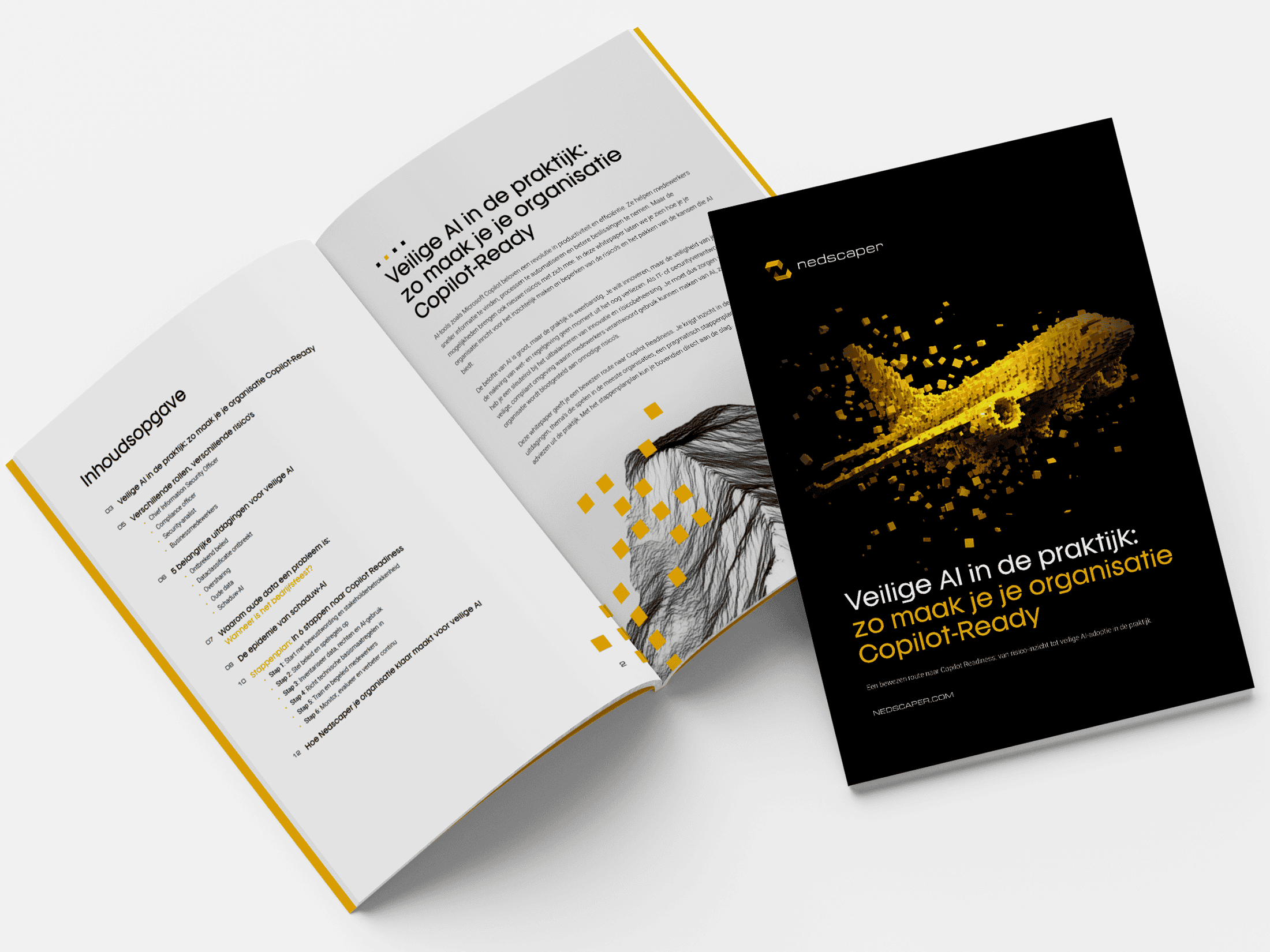
Download hier onze whitepaper en ontdek het volledige 6‑stappenplan naar Copilot‑Readiness.
—————————-
The compliance officer: AI through the lens of laws and regulations
AI is fundamentally changing the role of the compliance officer
The rise of AI tools such as Microsoft Copilot presents significant opportunities for organizations, but it also introduces new obligations and risks. For the compliance officer, this marks a critical shift. Where compliance traditionally focused on data protection, policy, and audits, AI demands a broader perspective: how do you ensure that every form of AI usage complies with regulations such as GDPR and BIO2, without stifling innovation?
Copilot operates on the basis of all available data. This makes it essential for organizations to fully understand which information AI can process, and how that aligns with legal and ethical frameworks.
The biggest concern: unintentional processing of sensitive data
One of the most pressing risks is that sensitive or special categories of personal data may be used by Copilot without employees even realizing it. Think of legacy documents containing national identification numbers, personal data embedded in outdated policy documents, or information that was never classified, but still resides in an environment Copilot can access.
For compliance, this means traditional control measures are no longer sufficient. AI dramatically broadens and accelerates data usage. This requires new forms of control: policy, classification, and technical boundaries that prevent unwanted data from being accessed by AI in the first place.
Regulations are tightening, and AI makes oversight more complex
BIO2 and other regulatory frameworks continue to impose stricter requirements on organizations, including:
- explicit risk assessments for information sharing
- mandatory classification of all data
- demonstrable safeguards for the processing of personal data
- transparency around systems used and data flows
AI accelerates data processing and increases information accessibility. As a result, compliance officers must define with greater precision what is permitted and what is not. Having a policy alone is not enough; employees must understand it, apply it, and comply with it in daily practice.
Why a strong AI policy is essential for compliance
One of the most common challenges we see in practice is the absence of a clear AI policy. Without clear rules, uncertainty arises. Employees don’t know which AI tools are allowed, when data may be used, or how incidents should be reported.
An effective AI policy clearly distinguishes between:
- data types that AI is allowed to use
- data that must be structurally excluded
- organizational roles and responsibilities
- processes for incident handling and oversight
This policy must always align with existing data governance and the organization’s data‑classification taxonomy.
AI compliance requires technology, policy, and human behavior
Compliance is never purely technical or purely policy‑driven, and with AI, this becomes even more evident. To reduce risk, organizations must combine multiple measures:
- Data Loss Prevention (DLP) to block the processing of sensitive data
- SharePoint Advanced Management to exclude high‑risk sites from AI indexing
- Monitoring via Microsoft Defender for Cloud Apps to track AI usage
- Training and awareness programs so employees understand why rules exist
When technology, policy, and adoption come together, organizations can use AI innovatively and responsibly.
The compliance officer plays a key role in secure AI adoption
To deploy AI responsibly, organizations need clear boundaries. The compliance officer defines these boundaries and ensures that processes and technology remain aligned with the law. In doing so, the compliance officer becomes one of the most critical strategic players in the AI transformation.
Whitepaper
Want to know how to approach this in a structured and practical way?
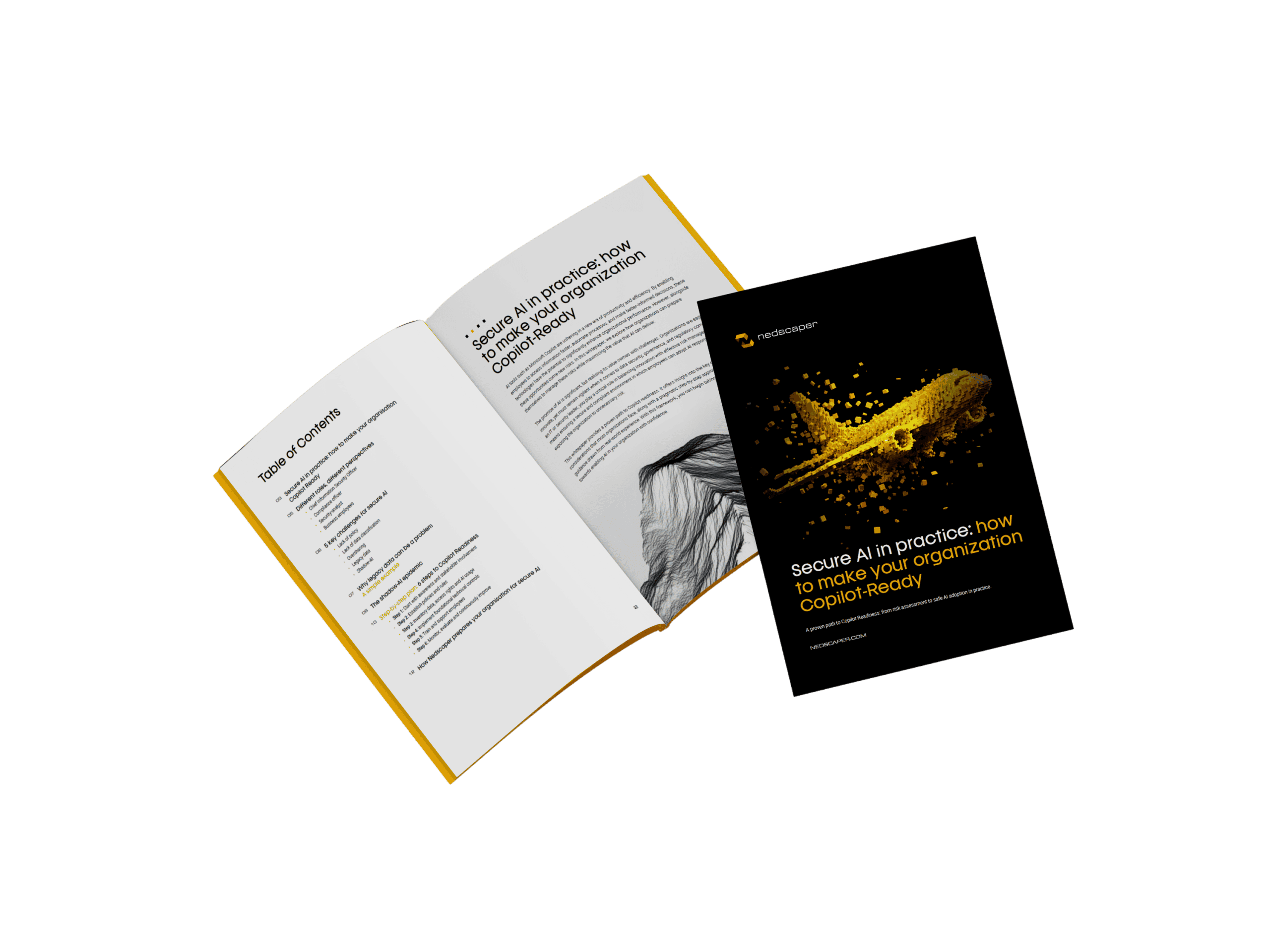
Download our whitepaper and discover the complete 6‑step roadmap to Copilot Readiness.


 3
3