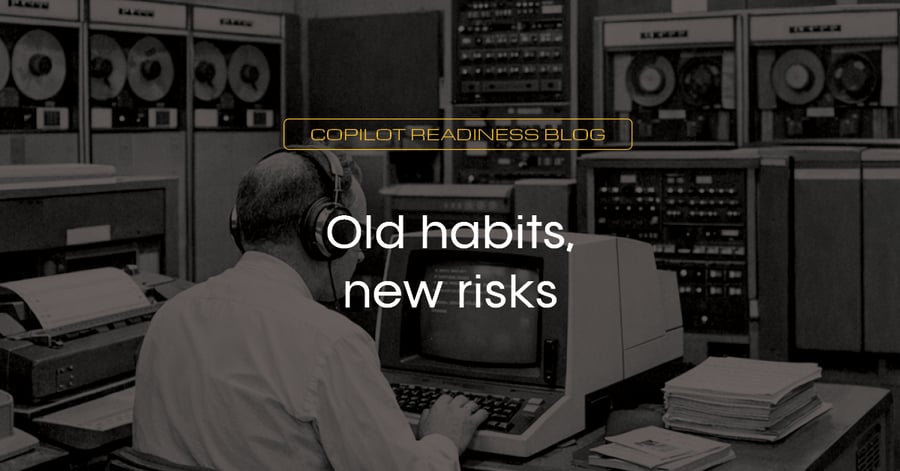
Old mindsets no longer work in an AI-driven world
Over the past few years, many organizations have invested heavily in privacy, security, and compliance policies. Documentation is in order, roles are defined, and audits are carried out diligently. However, the introduction of AI tools such as Microsoft Copilot fundamentally changes the landscape, not because the rules have changed, but because data is used, shared, and accessed in entirely new ways.
What was considered an acceptable risk for years can quickly become a serious issue in an AI‑driven environment. Long‑standing data‑management habits, such as broad access rights, limited data classification, and indefinite data retention, create new risks the moment AI makes that data easily searchable.
AI merilessly amplifies existing weaknesses
AI does not introduce risks that didn’t previously exist; it makes existing risks far more visible and impactful. Common examples include:
- oversharing within teams or departments
- legacy, unclassified documents containing sensitive information
- outdated or overly broad access permissions
- Shadow AI, where employees select and use tools independently
As long as files are accessed manually, these weaknesses often remain hidden. But Copilot searches entire datasets in one go, making information visible that was rarely consulted before. As a result, sensitive or outdated data can suddenly surface in AI‑generated responses, posing serious risks to privacy, security, and decision‑making.
Why "we've always done it this way" is no longer an argument
A frequently heard response is: “Our policies are already in place.”
But the key question is no longer whether policies exist; it’s whether they align with how AI actually works.
AI makes no distinction between old and new, relevant and irrelevant, safe and sensitive. Everything that is accessible is taken into account.
Long‑standing practices such as:
- default access for entire teams
- retaining documents for years without classification
- limited reporting on access or data flows
are no longer operational details in an AI context; they are strategic risks.
New habits for a future-proof AI organization
Organizations that want to work safely with AI must modernize their data culture. Key elements include:
-
- Stricter data classification
Labels define which data AI may use, making classification one of the most critical controls. - More deliberate access management
“Need to know” becomes essential. Access rights must be actively managed and regularly reviewed. - Monitoring AI usage
Tools such as Microsoft Defender for Cloud Apps provide insight into Shadow AI, data flows, and high‑risk locations. - Training and awareness
Employees need to understand how Copilot works and why secure data handling is essential.
- Stricter data classification
From paper assurance to demonstrable control
The organizations that succeed with AI are not necessarily those with the most extensive policies, but those that consistently bring policy, technology, and behavior together. They foster a culture of responsibility and data awareness, supported by clear guardrails and effective technology.
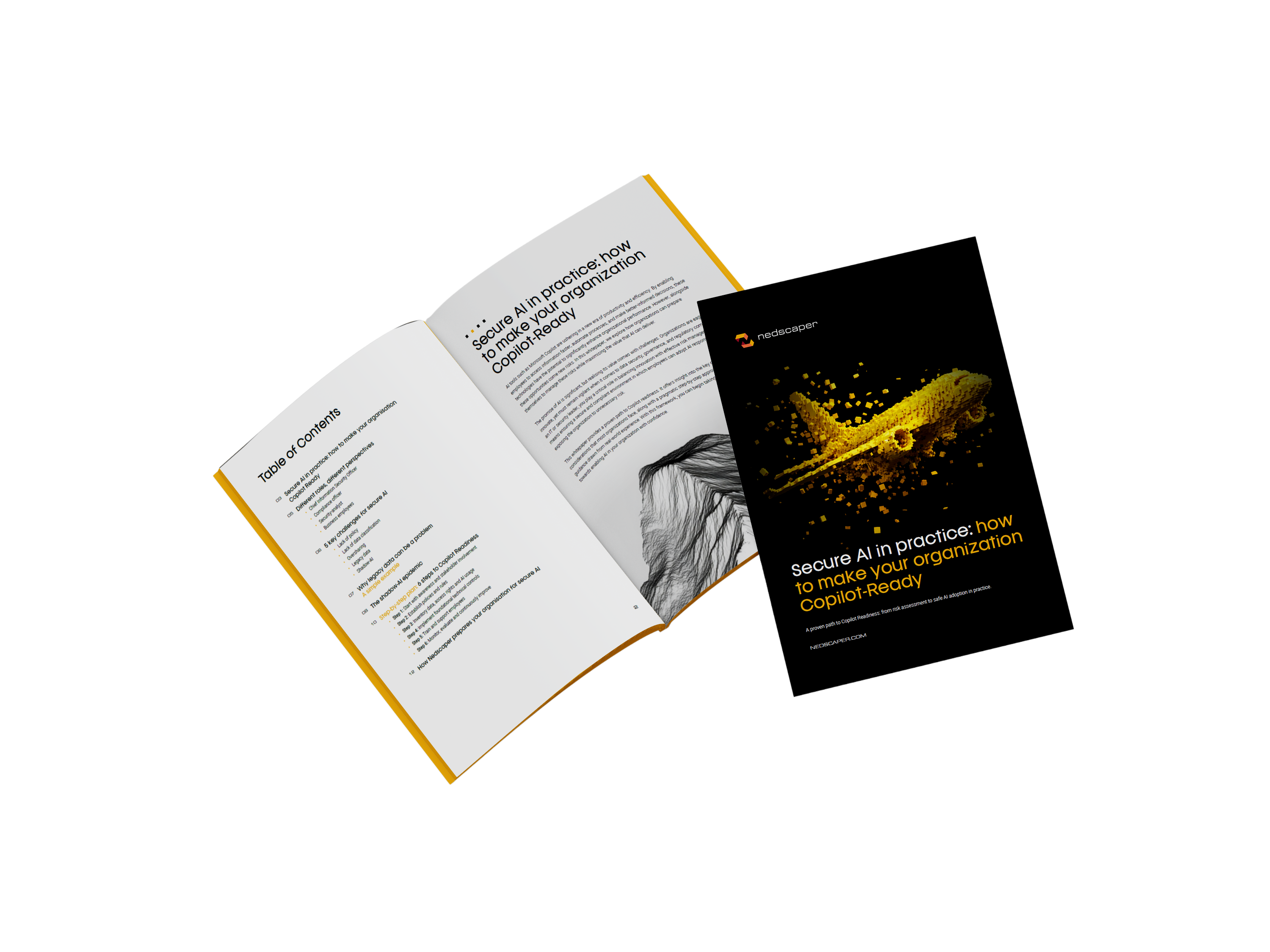
Download our Copilot-Readiness whitepaper
Want to kno how to make your organization Copilot Ready?