Shadow AI is growing faster than organizations can keep up
AI tools such as Microsoft Copilot are being adopted by employees at an unprecedented pace. The promise is clear: smarter ways of working, faster access to information, and automation of repetitive tasks. But behind the scenes, a risk is emerging that is far greater than many organizations anticipate: Shadow AI.
While Shadow IT has long been recognized and, to some extent, managed, Shadow AI introduces a new and far more complex category of risk, one that does not align neatly with existing security controls.
Based on real‑world experience and research, nearly 60% of employees use AI tools without formal approval. These tools are often not assessed by IT, not monitored, and operate with completely opaque data flows. As AI adoption accelerates, this creates a growing security blind spot.
Why Shadow-AI is fundamentally different from shadow-IT
At first glance, Shadow AI may resemble Shadow IT, but there are three critical differences.
First, AI tools are far more likely to process sensitive information, as employees use them to generate content, analyze documents, or answer policy‑related questions. Second, the data entered is often transmitted to external systems outside the organization’s visibility or control. Third, the immediate value delivered by AI dramatically lowers the barrier to adoption.
The result is a risk that is deeper and more diffuse than traditional unauthorized applications. IT teams can’t see it, security teams can’t easily block it without hindering innovation, and compliance teams lack insight into what data may be leaving the organization.
Blocking doesn't work: employees will always find a way
Many organizations instinctively respond by banning or restricting AI usage. In practice, this approach only makes the problem worse. When approved tools are absent, employees will inevitably seek alternatives, and it is precisely these uncontrolled alternatives that pose the greatest risk.
Blocking AI is like trying to stop water with your hands: the pressure continues to build until it finds another way through. Real control only becomes possible when organizations understand what is happening, where it is happening, and why employees turn to external AI tools in the first place.
Steering instead of blocking is the only sustainable strategy
Organizations that want to minimize Shadow AI must shift from restriction to governance. That starts with visibility. Solutions such as Microsoft Defender for Cloud Apps can reveal which AI services are being used, how often, by whom, and which data categories may be at risk.
Clear, practical policy must follow. Many organizations still lack an AI policy that aligns with their data classification and governance frameworks. As a result, employees simply don’t know which tools are permitted or which types of data should never be entered into AI systems.
Awareness is equally critical. Employees need to understand why AI usage carries risks and which secure alternatives are available. The better employees understand the impact of their actions, the less likely they are to operate outside defined boundaries.
Shadow AI requires leadership and deliberate choices
Shadow AI is not a temporary phenomenon. It is a structural trend that will only intensify as AI becomes more powerful and more accessible. Organizations that invest now in monitoring, policy, and user education are not only building a more secure digital environment, they are creating a culture where innovation can grow responsibly.
Want to know how to make your organization Copilot-Ready?
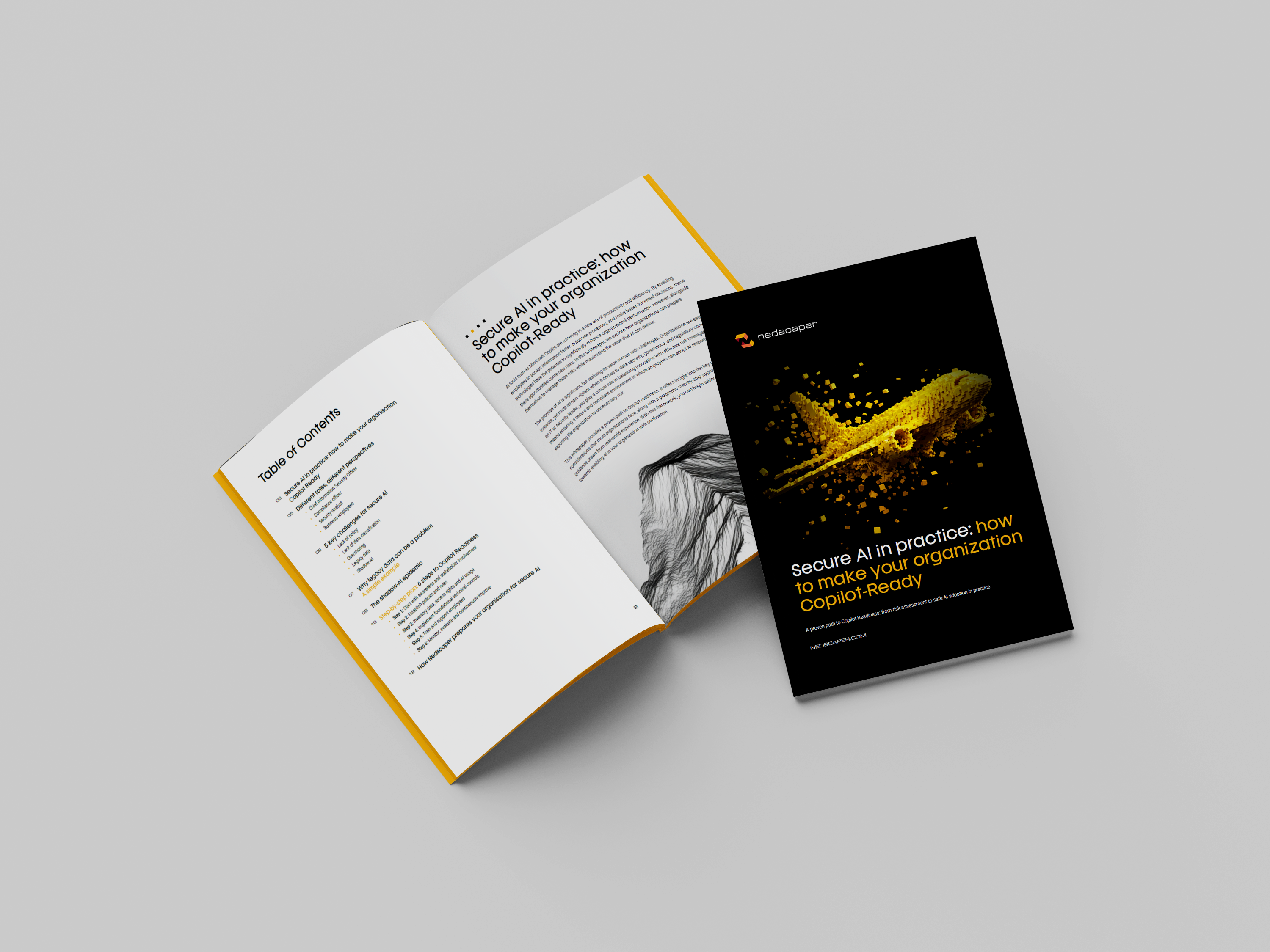
Download our whitepaper
Discover the complete 6-step roadmap to Copilot Readiness.